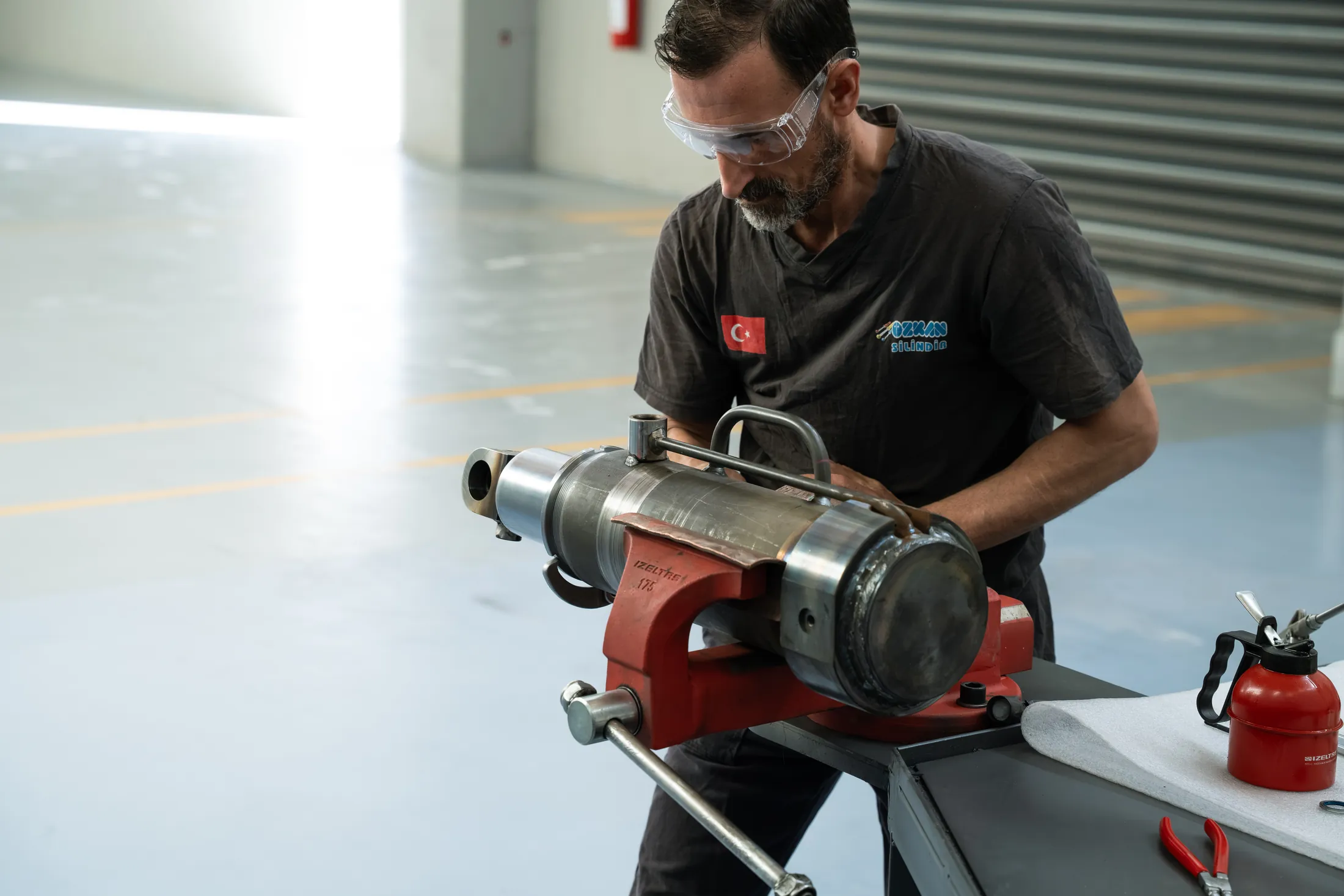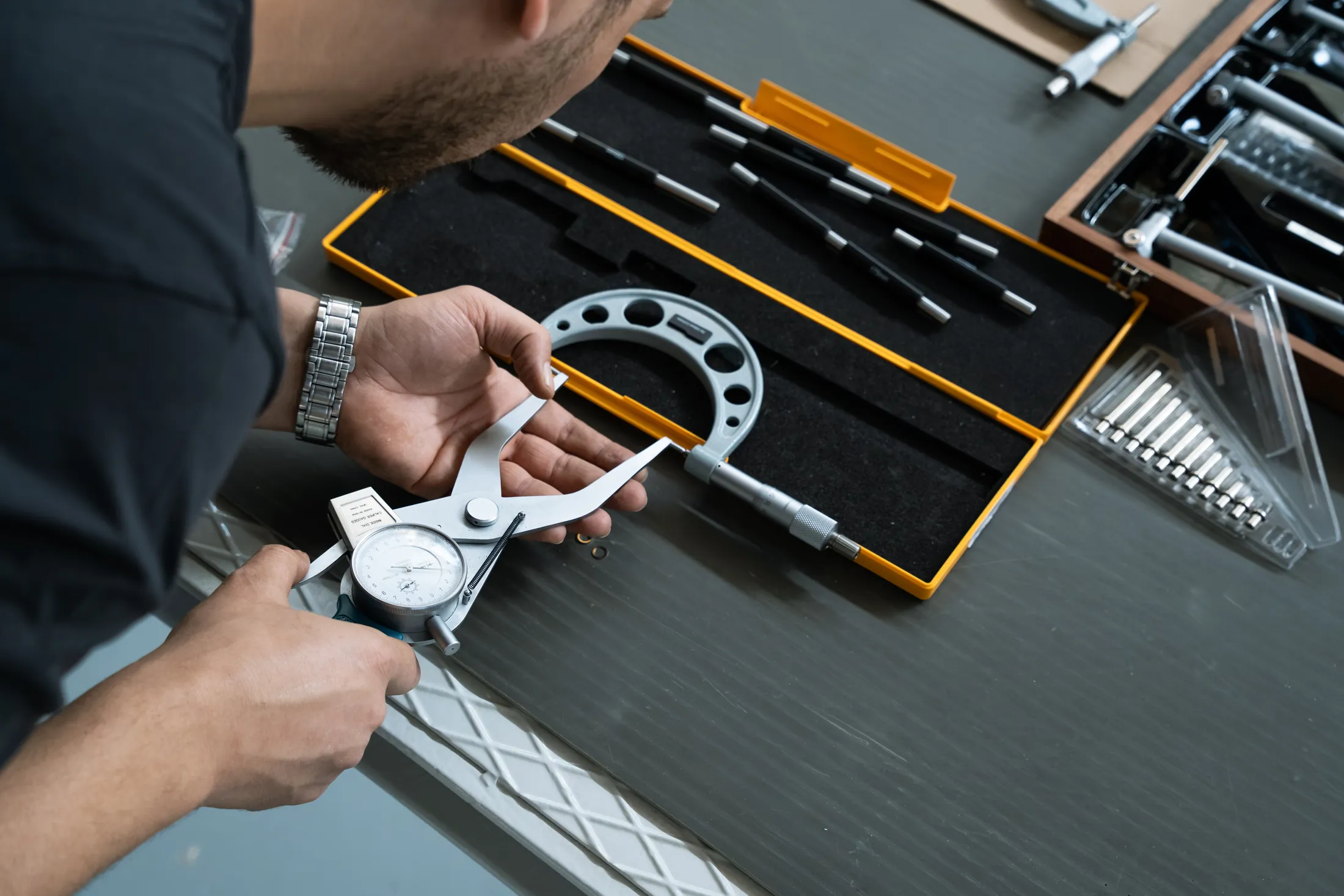
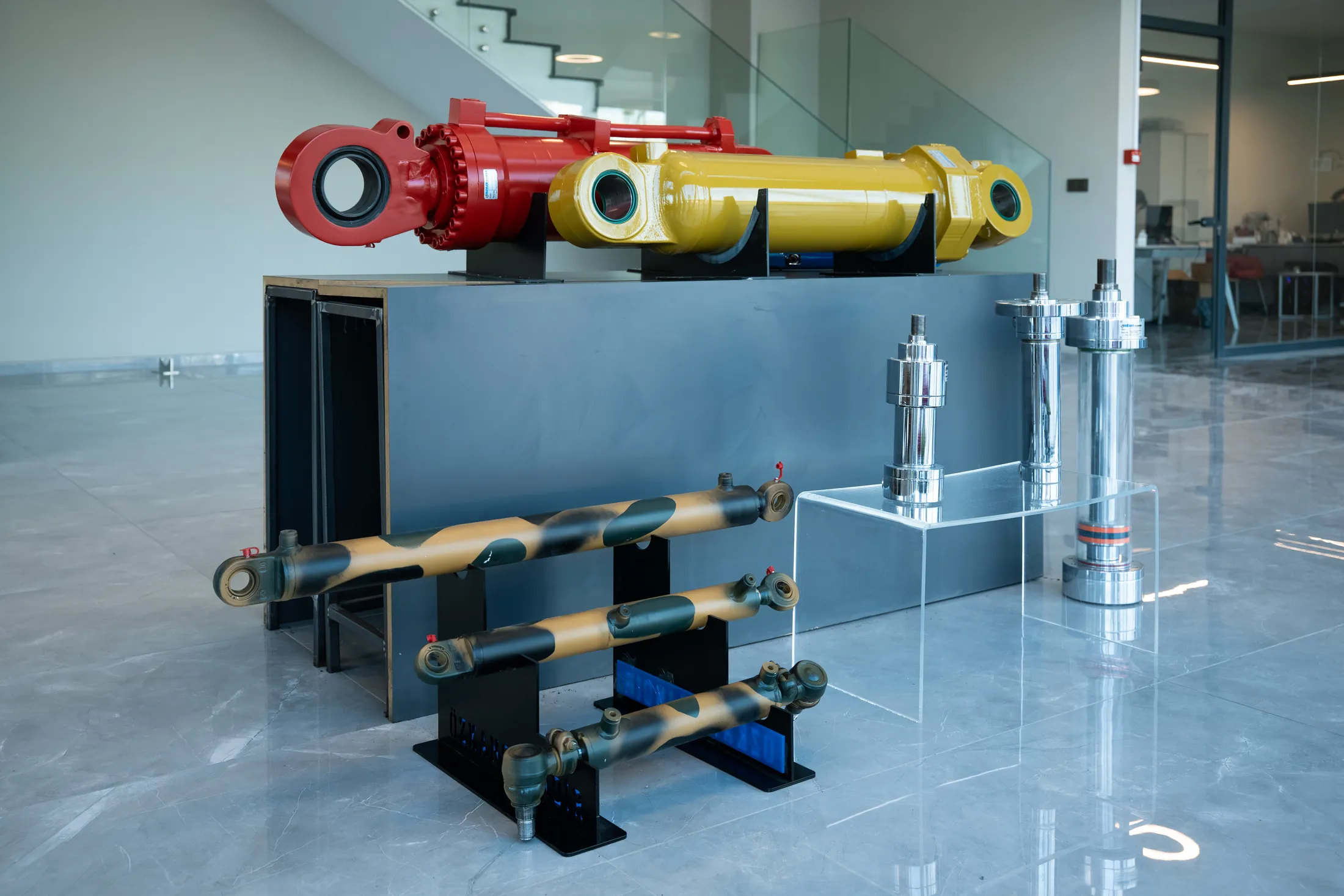
Short answer: Hydraulic cylinders are manufactured in three main types. A single-acting cylinder works with hydraulic power in only one direction, and its return is provided by the load, weight or a spring. A double-acting cylinder works with pressurized oil in both the push and pull directions. A telescopic cylinder delivers a long stroke with a short closed length thanks to its nested stages. The right choice depends on the direction of force, the stroke-to-closed-length ratio and the available mounting space.
How does a hydraulic cylinder work?
A hydraulic cylinder is an actuator that converts the energy of pressurized oil from the pump into linear motion and force. The basic principle is simple: Force = Pressure × Area. At the same pressure, the larger the piston diameter, the greater the force obtained. For example, a cylinder with a 100 mm piston diameter produces approximately 157 kN (≈16 tons) of push force at 200 bar pressure.
The main parts of a cylinder are as follows:
- Barrel (tube): The pressure-bearing cylinder body with a honed inner surface.
- Piston: The part that moves inside the barrel and divides the pressurized oil into two chambers.
- Rod (shaft): The steel shaft connected to the piston that transmits the force outward, usually hard chrome plated.
- Head (gland): The cap that supports the rod and provides sealing on the rod side.
- Sealing elements: Piston seal, rod seal, dust seal (wiper) and guide bands.
- Connections: Eye, flange, trunnion or foot mountings that connect the cylinder to the machine.
Single-acting hydraulic cylinder
In a single-acting cylinder, pressurized oil is supplied to only one chamber (usually the piston side). The cylinder extends with oil pressure; retraction is achieved by the weight of the load itself, an external force or an internal return spring.
- Applications: Hydraulic jacks, lifting platforms, some press applications, and systems where the load lowers under its own weight.
- Advantages: Simple construction, single hose connection, fewer parts.
- Limitation: The return speed and force cannot be controlled; it is not suitable for jobs that require retracting without a load.
Double-acting hydraulic cylinder
In a double-acting cylinder, oil is supplied alternately to the piston side and the rod side with the help of a valve. This way, both the extending and retracting movements are performed with hydraulic power in a controlled manner. This is the most widely used type in industry.
- Applications: Boom, arm and bucket cylinders of excavators; loaders and dozers, hydraulic presses, mobile cranes, industrial automation.
- Advantages: Force and speed control in both directions, precise positioning.
- Points to note: During retraction, the oil acts on the annular area, which is the area minus the space occupied by the rod, so the pull force is lower than the push force. This difference must be taken into account when selecting the piston and rod diameters.
Telescopic hydraulic cylinder
A telescopic cylinder consists of two or more nested stages. When closed, it takes up very little space, and when extended, it provides a stroke several times its closed length. It can be designed as single-acting or double-acting.
- Applications: Dump trucks, garbage trucks, trailers, and some firefighting and lifting equipment.
- Advantage: Long stroke in limited mounting space.
- Points to note: As the number of stages increases, the force and speed of each stage change; proper guiding against lateral loads is important.
Comparison table
| Feature | Single-acting | Double-acting | Telescopic |
|---|---|---|---|
| Hydraulic operating direction | One direction | Two directions | One or two directions |
| Return | Load / weight / spring | Pressurized oil | Depends on design |
| Stroke / closed length ratio | Standard | Standard | Very high |
| Hose connection | 1 | 2 | 1 or 2 |
| Typical application | Jack, platform | Construction machinery, press | Dump truck, garbage truck |
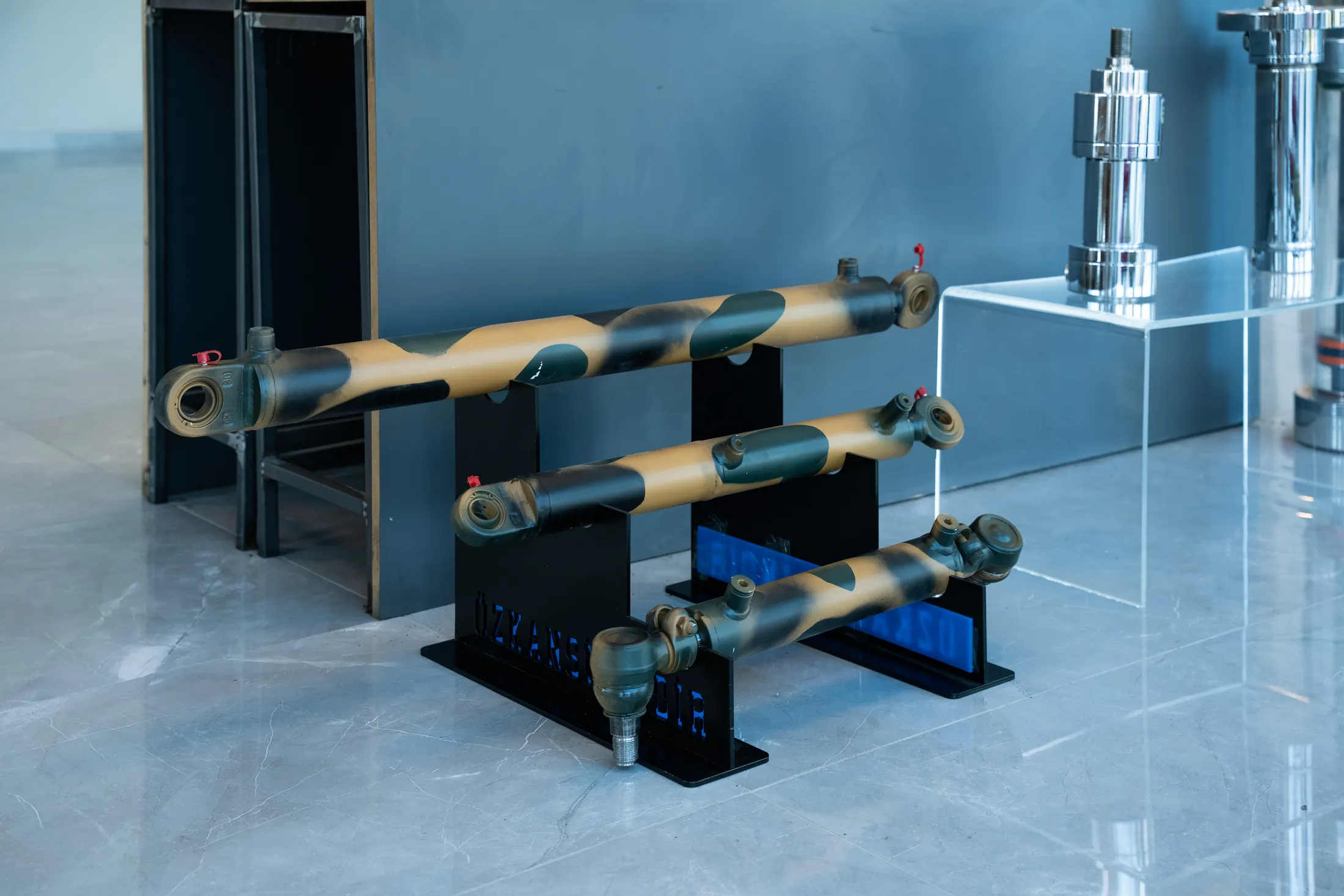
Mounting types
How the cylinder is connected to the machine is at least as important as the cylinder type for transmitting force correctly and protecting the rod from lateral loads:
- Clevis eye (bushed / spherical rod end): The most common type in construction machinery; the spherical rod end tolerates small axis misalignments.
- Flange mounting: Rigid mounting with a front or rear flange; frequently used in presses.
- Trunnion: A mounting that allows the cylinder to pivot from its body.
- Foot mounting: For applications where the cylinder is fixed horizontally to a surface.
Choosing the right cylinder for your application
The right cylinder is determined by evaluating the required force, stroke, closed length, working pressure, speed and operating environment together. For an initial estimate, you can use our hydraulic cylinder force calculator, and you can review which dimensions are needed before requesting a quote in our hydraulic cylinder dimensions guide. Özkan Silindir manufactures single-acting, double-acting and telescopic cylinders in eight sectors, including construction and earthmoving machinery, mining machinery, vehicle-mounted equipment and the defense industry.
Need a cylinder for your project? Send us the machine type, dimensions and, if available, photos of your existing cylinder via the contact form, and our team will share the right solution with you.